
What is Quantum Acoustics?
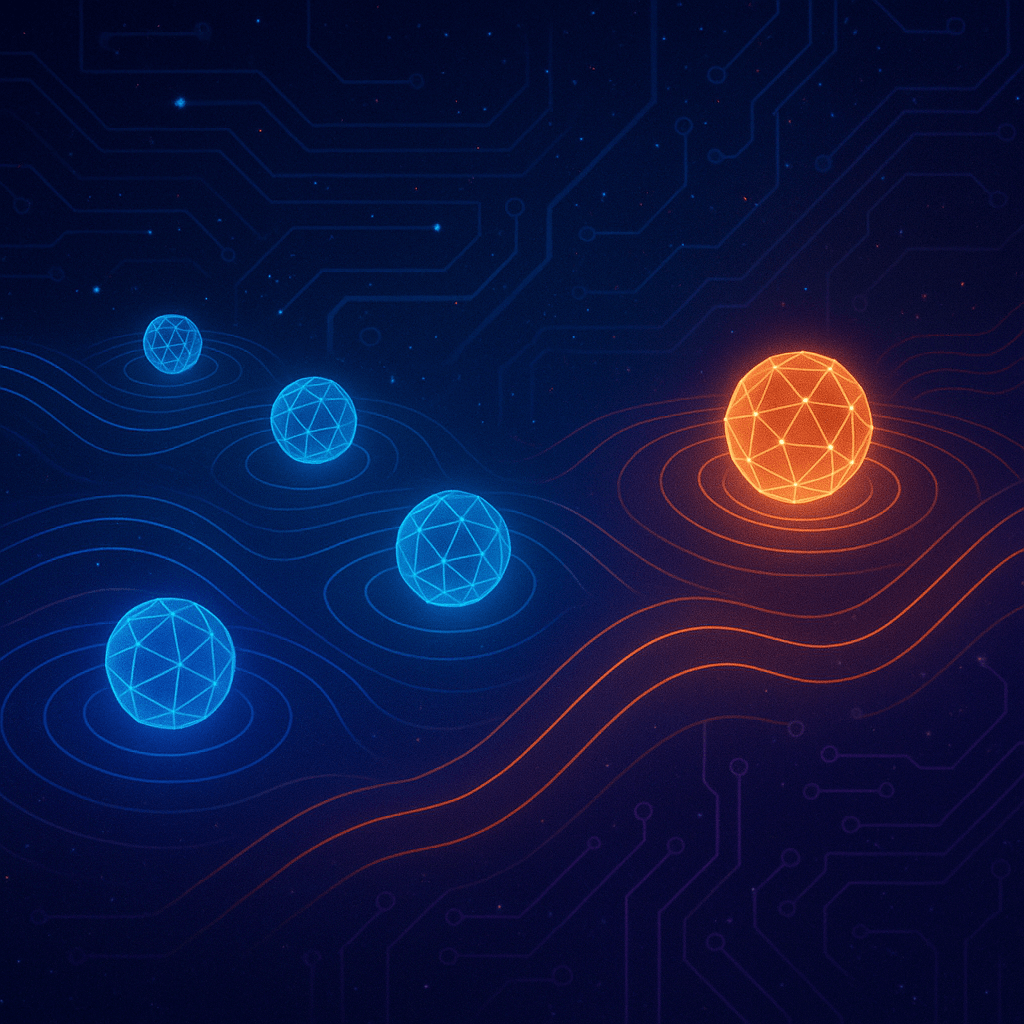
Quantum acoustics is the study of sound — specifically vibrations and phonons — at the quantum level. While traditional acoustics deals with how sound waves move through air, water, or solids, quantum acoustics zooms in to the tiniest possible scale, where sound energy is carried in discrete packets called phonons (similar to how light is carried by photons).
Instead of thinking about sound as a continuous wave, quantum acoustics treats it as a stream of quantized energy vibrations that can be manipulated with precision, potentially unlocking new technologies.
Key Principles of Quantum Acoustics
- Phonons as Quantum Particles
- In quantum theory, vibrations in a solid are not just random jiggles; they exist as quantized excitations (phonons) with specific frequencies and energies.
- Interaction with Qubits
- In quantum computing, qubits can be coupled to phonons, enabling new forms of data storage, transfer, and processing through sound rather than light.
- Wave–Particle Duality of Sound
- Just as photons can act like both waves and particles, phonons also exhibit wave–particle behavior, enabling precise control of how sound interacts with matter.
Applications of Quantum Acoustics
- Quantum Computing
- Acoustic waves can carry quantum information in superconducting circuits over longer timescales than photons, making them a potential tool for creating more stable quantum computers.
- Medical Imaging
- Quantum-level sound manipulation could lead to ultra-precise ultrasound technologies capable of detecting disease at the cellular level.
- Secure Communication
- Phonon-based communication systems may one day provide secure, low-energy channels for transmitting data, immune to many forms of interception.
- Materials Science
- By controlling phonons, scientists could engineer materials with tailored properties, such as improved heat conduction or vibration damping.
How to Use This Knowledge in Everyday Life
While quantum acoustics is still mostly in research labs, understanding its principles can help you:
- Spot future tech trends: Watch for developments in quantum communication, computing, and ultra-precise sensing.
- Improve listening skills: Quantum acoustics reminds us that sound carries far more information than we notice — developing deep listening can improve communication and awareness.
- Enhance meditation and sound therapy: While not directly quantum, these practices use resonant frequencies in ways that mirror some quantum acoustic principles.
Fun Fact
If photons are the messengers of light, phonons are the “whispering messengers” of the material world — carrying the quietest signals in the universe, sometimes at frequencies far beyond human hearing.