
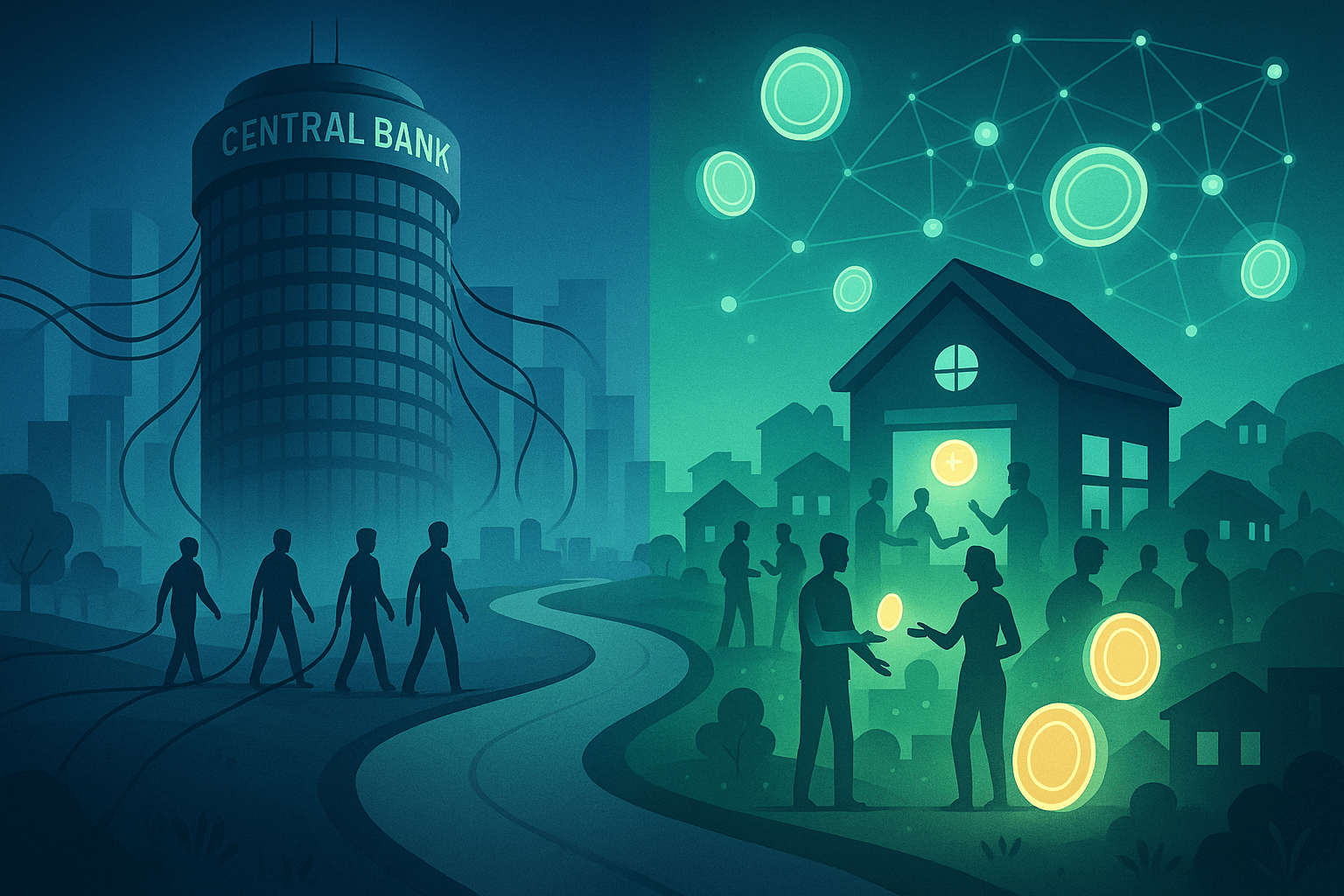
When I first started digging into the world of banks, it wasn’t because I had some burning desire to study financial institutions. It was because of Project TP.
I kept asking myself: If we’re building a digital country, how do we make money work for its citizens? People will need a safe place to store value, an easy way to trade, and the confidence that their savings won’t vanish overnight because of some boardroom decision half a world away.
That led me down a rabbit hole, and somewhere along the way, I ran into the Bank for International Settlements (BIS). Some videos painted them as shadowy controllers of the global financial system, others as boring technocrats in Switzerland. The truth, as always, is more complex. But it got me thinking: if BIS and central banks are shaping the future of money through things like Central Bank Digital Currencies (CBDCs), then Project TP needs to be designed with strong safeguards from the start.
What is the BIS, Really?
The BIS is often called “the bank for central banks.” Headquartered in Basel, Switzerland, it’s where 63 of the world’s central banks get together to share research, set standards, and coordinate policy.
They don’t directly manage your bank account. You won’t see a BIS-branded ATM on the high street. But the standards they set, like the famous Basel accords, trickle down into your everyday banking life. In that sense, their influence is quiet but far-reaching.
The Concerns Around Centralization
Here’s where critics raise their eyebrows.
- CBDCs and programmability: Central banks around the world are experimenting with digital currencies. Critics worry these could be used to freeze accounts, impose negative interest rates, or even restrict how money is spent.
- Surveillance risks: Unlike cash, digital transactions can be tracked. That opens the door to detailed monitoring of people’s financial lives.
- Secrecy: Central banks, including the BIS, aren’t always transparent about their inner workings. Decisions with global consequences often happen behind closed doors.
- Control vs. governance: As one speaker put it, “we don’t have a financial problem, we have a governance problem.” It’s not the technology itself that’s the issue, it’s how it’s used.
Now, to be fair, CBDCs aren’t automatically bad. They could make payments faster, cheaper, and more inclusive. The BIS also does genuinely useful work in promoting stability. But it’s hard to ignore the potential risks if the system is designed for control rather than freedom.
Why Project TP Needs Its Own Currency
This is why I’ve been exploring the idea of EarthCoin (or whatever name we eventually land on) for Project TP.
I want a currency that is:
- Citizen-first: controlled by the people who use it, not by unelected institutions.
- Safe and private: no one should fear that their money could be frozen because of politics or personal beliefs.
- Stable: backed by real reserves and designed to protect value over time.
- Flexible: usable online and offline, whether in a big city or a small village hub.
The vision is simple: whether you’re trading goods in a local hub or shopping online, you should be able to use the same currency, knowing it’s part of a system built for trust and resilience.
BIS vs TP — Safeguards by Design
When I compared what worries people about the BIS system to what Project TP could do differently, the map became clear.
- Risk: Centralized control over money.
TP safeguard: Community voting on all protocol changes. No single entity can flip the switch. - Risk: Programmable restrictions (spend here, not there).
TP safeguard: Wallets are self-custody. Programmability is opt-in, never imposed. - Risk: Surveillance by default.
TP safeguard: Privacy built in. Transactions private unless you choose otherwise. - Risk: Outages or disasters making money inaccessible.
TP safeguard: Offline payment tools like QR chits or local hub settlements. (I’m still working on this one). - Risk: Volatility or collapse of trust.
TP safeguard: Reserves backed by a basket of assets, transparently managed.
It comes down to one principle: no single chokepoint. If one piece fails — a hub, a bridge, a server — the system keeps going. That’s how resilience should work.
The Bigger Picture
At the end of the day, money isn’t just numbers on a screen. It’s culture. It’s trust. It’s how we feed our families, build our communities, and create the future we want.
That’s why Project TP’s banking system isn’t just about technology, it’s about values. Transparency over secrecy. Community over centralization. Freedom over control.
The BIS will keep doing its work, setting standards and shaping the future of banking. But that doesn’t mean the rest of us are powerless. We can build alternatives. We can design systems that serve people, not power.
So… Closing Thoughts
For me, Project TP is about asking a simple question: what if money could serve us, instead of us serving money?
I don’t have all the answers yet. But every step, whether it’s mapping risks, designing safeguards, or sketching out a currency system, brings us closer to that vision.
If you’ve been following along with this series, I’d love to hear your thoughts. Because in the end, the currency of the future won’t just be digital. It will be built on relationships of trust.