
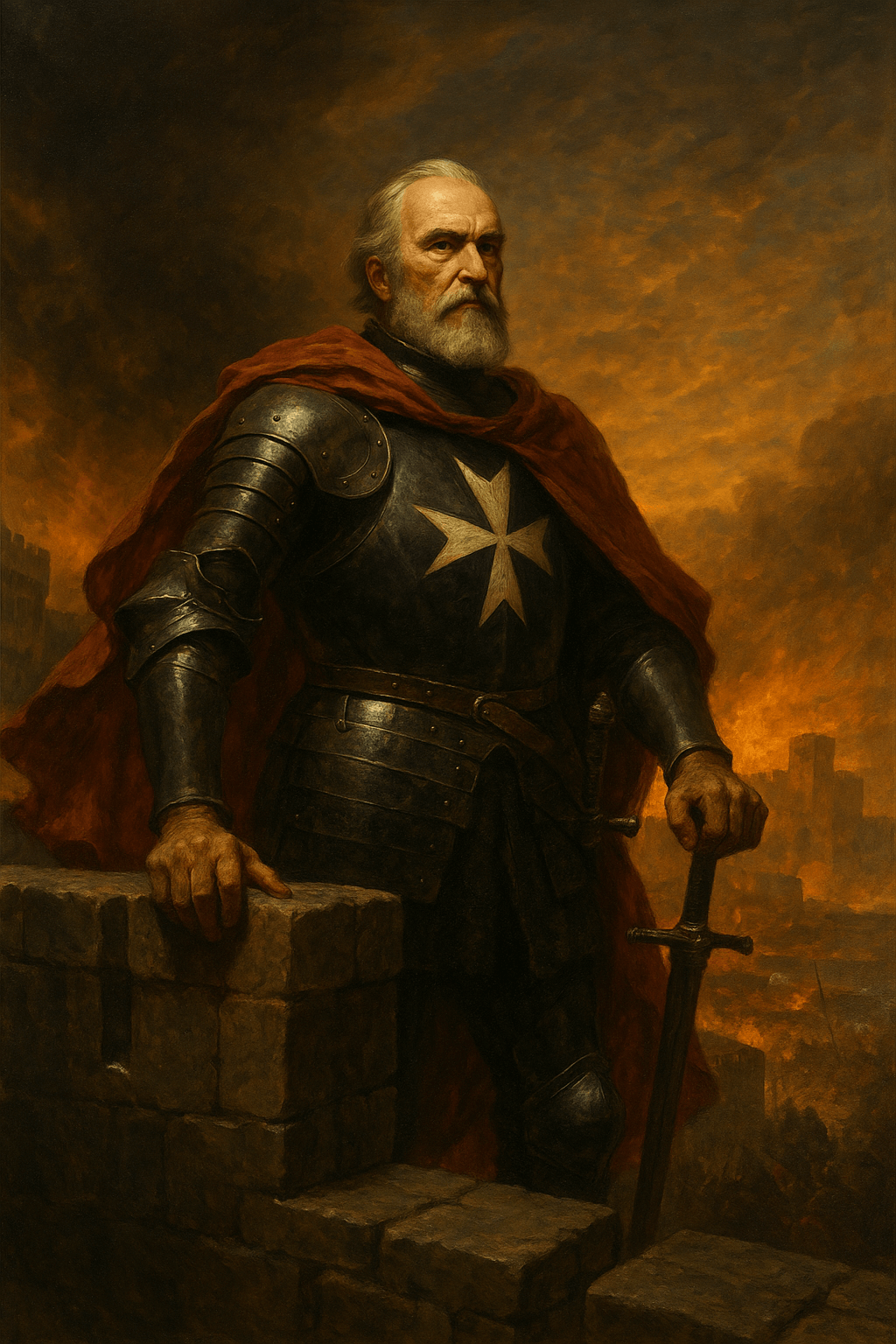
Guardians of Faith and Fortress
The Knights of Malta, also known as the Sovereign Military Order of Malta, are among the most storied chivalric orders in history. Emerging during the Crusades, these warrior monks combined faith, military strategy, and humanitarian care into one powerful legacy. But among them, some knights rose above the rest—legends whose names echo through time.
In this article, we explore the greatest Knights of Malta, their deeds, and how they helped define an Order that still survives to this day.
1. Jean de Valette – The Hero of the Great Siege of Malta (1565)
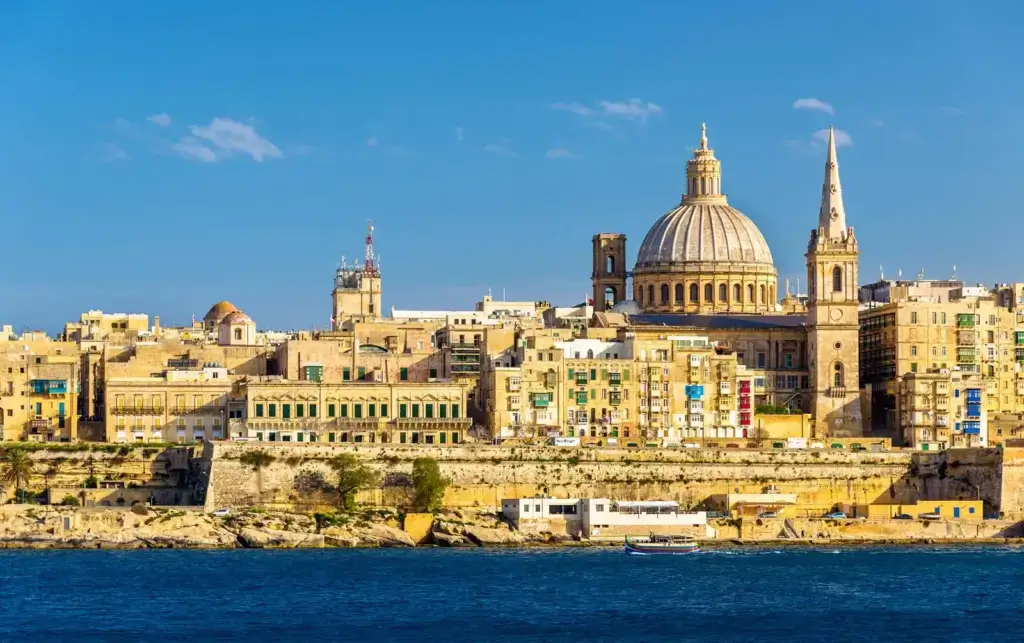
No list of legendary knights is complete without Grand Master Jean de Valette. When the Ottoman Empire launched a massive invasion in 1565, it was de Valette who stood tall.
Key Achievements:
- Led a defense with just 6,000 men against 30,000 Ottoman troops.
- Refused to surrender even after catastrophic losses.
- Inspired the building of Valletta, Malta’s capital, named in his honor.
His strategic mind, unwavering faith, and leadership turned the tide of one of the most pivotal battles in Mediterranean history.
2. Philippe Villiers de L’Isle-Adam – The Knight Who Resurrected the Order
After the fall of Rhodes in 1522, many believed the Order was finished. Enter Philippe Villiers de L’Isle-Adam, who negotiated with Emperor Charles V to grant the Knights the island of Malta in 1530.
Why He Matters:
- Saved the Order from collapse after Rhodes.
- Laid the foundation for the Knights’ rise in Malta.
- Symbolized diplomatic and strategic brilliance.
Without him, the Knights of Malta may have been a forgotten footnote.
3. Fra’ Antonio Manoel de Vilhena – Builder of Beauty and Strength
One of the more cultured Grand Masters, Antonio Manoel de Vilhena (1722–1736) was both a patron of the arts and a firm military reformer.
Legacy Includes:
- Construction of Fort Manoel, still standing today.
- Revitalized Malta’s defenses and infrastructure.
- Encouraged architectural and cultural development.
He proved that strength comes not just from battle but from vision and innovation.
4. Fra’ Matthew Festing – The Modern Reformer
Moving into recent history, Fra’ Matthew Festing (1949–2021) served as Grand Master from 2008 to 2017.
Notable Contributions:
- Promoted global humanitarian outreach.
- Preserved the spiritual values of the Order in the modern era.
- Strengthened diplomatic ties with over 100 countries.
He reminded the world that the Knights are not just relics of the past—they’re still actively serving humanity.
5. The Unsung Hospitallers – Healing Hands in the Shadows
While Grand Masters receive most of the fame, thousands of unnamed Hospitaller Knights served in hospitals across the Mediterranean, healing the sick regardless of creed or origin.
Why They Deserve Recognition:
- Advanced medical care centuries ahead of their time.
- Operated some of the earliest military hospitals.
- Practiced mercy and service with quiet dedication.
In many ways, they upheld the true spirit of knighthood—service over swordplay.
More Than Just Warriors
The Knights of Malta are more than battlefield legends; they’re architects of cities, healers of the sick, and guardians of spiritual heritage. From Jean de Valette’s sword to Antonio Vilhena’s cultural vision, these knights shaped a legacy that transcends time.
In honoring these great Knights, we recognize a broader truth: true greatness is found not just in battle, but in courage, vision, and service to others.
The purpose of the Knights of Malta, at their core, can be summed up like this:
“To serve humanity through faith, protection, and care — especially in times of crisis.”
Who Were the Knights of Malta?
They began as the Knights Hospitaller around the year 1099, during the Crusades in Jerusalem. Their original mission?
- Care for sick and wounded pilgrims in the Holy Land
- Protect Christian territories through military service
When they were forced to relocate (first to Rhodes, then to Malta in 1530), they became known as the Knights of Malta. The name stuck, even after they left the island.
What Was Their Purpose?
1. Hospital Work:
They ran some of the most advanced hospitals in medieval Europe and the Middle East. That’s why they were called Hospitallers — their work with the sick came before the sword.
2. Defense of Christendom:
They were also trained warriors. They defended Christian lands (especially from Ottoman invasions) and provided security for pilgrims traveling to sacred sites.
3. Humanitarian Service:
Over time, their focus shifted toward charity, relief work, and diplomacy, which continues today through the Sovereign Military Order of Malta — a modern humanitarian organization with no army, but a strong global presence.
Their Enduring Purpose Today
Even now, they stand for:
- Neutral, apolitical humanitarian aid
- Medical missions and disaster relief
- Faith-driven service in over 120 countries
They still carry that old motto:
“Tuitio Fidei et Obsequium Pauperum”
(Defence of the Faith and Service to the Poor)
So, if you’re ever unsure who they were, just remember:
They were warrior-healers — defenders of the faith and caretakers of the weak.