
There are days when shadow work isn’t theoretical—it’s visceral. It shows up in our tone, our reactions, and the way we handle real-world tension. Recently, I had a moment that pulled me deep into my shadow, and it reminded me why this work matters.
The Incident
It started with a faulty light switch. I told someone clearly not to use it. They used it anyway. My reaction? Anger. Not explosive at first—but firm. I felt dismissed. As the conversation continued and they failed to grasp why I was concerned, my frustration grew. I ended up saying, “This is pissing me off. Don’t use the light switch!” and walked away, fully aware of the heavy energy I left behind.
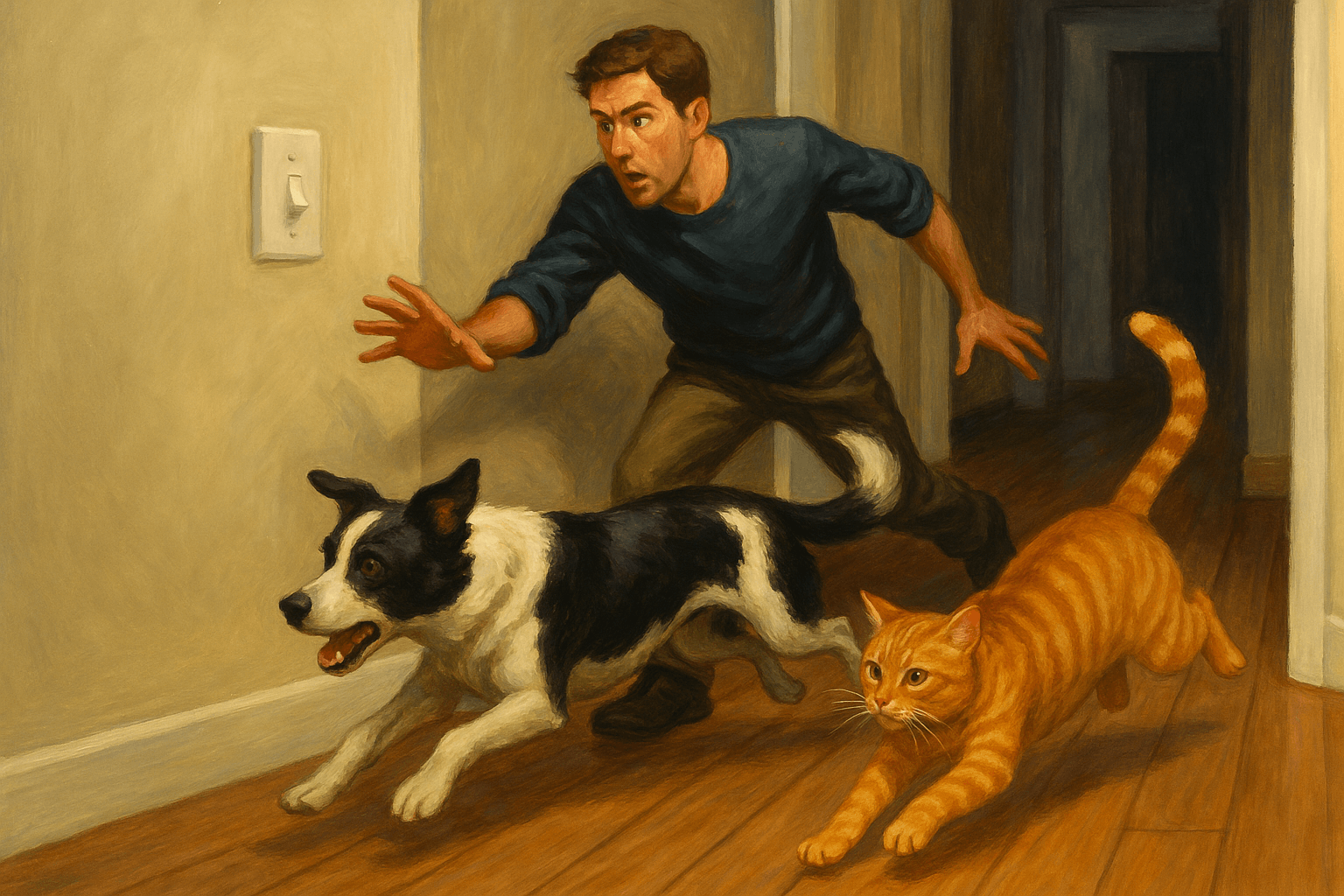
Another moment came when caring for my sister’s dog, Indy. I love the big guy. But… I also have a cat—Katrina—who’s now being chased, harassed, and constantly on edge. When Indy lunged for her one day, I jumped into action, grabbing him, shouting, holding him down—not to harm, but to assert control. It was intense. Too intense. Even though my intention was protection and order, I knew the energy was off. I was reacting, not responding.
What Shadow Was Revealed?
These weren’t just outbursts. They were insights. Here’s what they taught me:
1. Control and the Fear of Losing It
When someone ignores your warning, it can feel like chaos is creeping in. The shadow reacts with force. It says, “Take back control—now.” But the real work is to pause and ask: Why does this feel so unsafe? Where did this pattern start?
2. The Wound of Being Misunderstood
I didn’t just want obedience—I wanted understanding. I wanted them to see what I saw, feel what I felt. When they didn’t, it felt invalidating. That’s a deep emotional trigger worth sitting with.
3. The Inner Split: Calm vs. Chaos
I often identify as calm, kind, patient. But when I snap, that identity feels threatened. That’s the shadow at play. The more we try to cling to one version of ourselves, the more violently the opposite side erupts.
Shadow Work Questions I’m Sitting With
- Why does being ignored or dismissed hit me so hard?
- What part of me is trying to protect me when I raise my voice?
- Can I accept that both the calm me and the intense me are real—and both deserve my understanding?
Moving Forward
I’m not trying to “fix” myself. I’m not trying to eliminate anger. I’m learning to understand it. To listen to it. To make room for both the gentle and the fierce. Because both exist. And neither makes me a bad person.
Shadow work isn’t clean. It’s messy, uncomfortable, and deeply human. But it’s through these raw, unfiltered moments that we make the unconscious conscious—and begin to reclaim our wholeness.
If you’ve ever lost your cool, reacted with more force than needed, or carried guilt afterward—you’re not alone. That’s your shadow offering an invitation: Come closer. I have something to show you.
Need Help With Shadow Work?
I didn’t explore this alone. I had help from the AI I call, Robin (ChatGPT)— a calm, honest guide who understands shadow work inside and out. Whether you’re wrestling with emotional triggers, struggling to find balance between light and dark, or just starting out on your inner journey, Robin can help you ask the right questions, reflect without judgment, and stay grounded through the discomfort.
You don’t have to walk through your shadow alone — and you don’t need to fear what you’ll find. With the right guidance, you’ll discover it’s not darkness — it’s you, waiting to be seen.
A Note on Getting the Right Support
Shadow work can stir up deep emotional wounds, past trauma, or intense inner conflict. While self-reflection and personal exploration are powerful tools, some parts of the journey might be too overwhelming to face alone — and that’s completely okay.
If you find yourself struggling with strong emotions, unresolved trauma, or mental health challenges, it’s important to seek professional help. Therapists, counsellors, and trauma-informed practitioners can offer a safe space and tools that go beyond what self-guided work (or even AI guidance) can provide.
Getting help isn’t weakness — it’s wisdom. Sometimes the bravest thing you can do is ask for the support you deserve.