
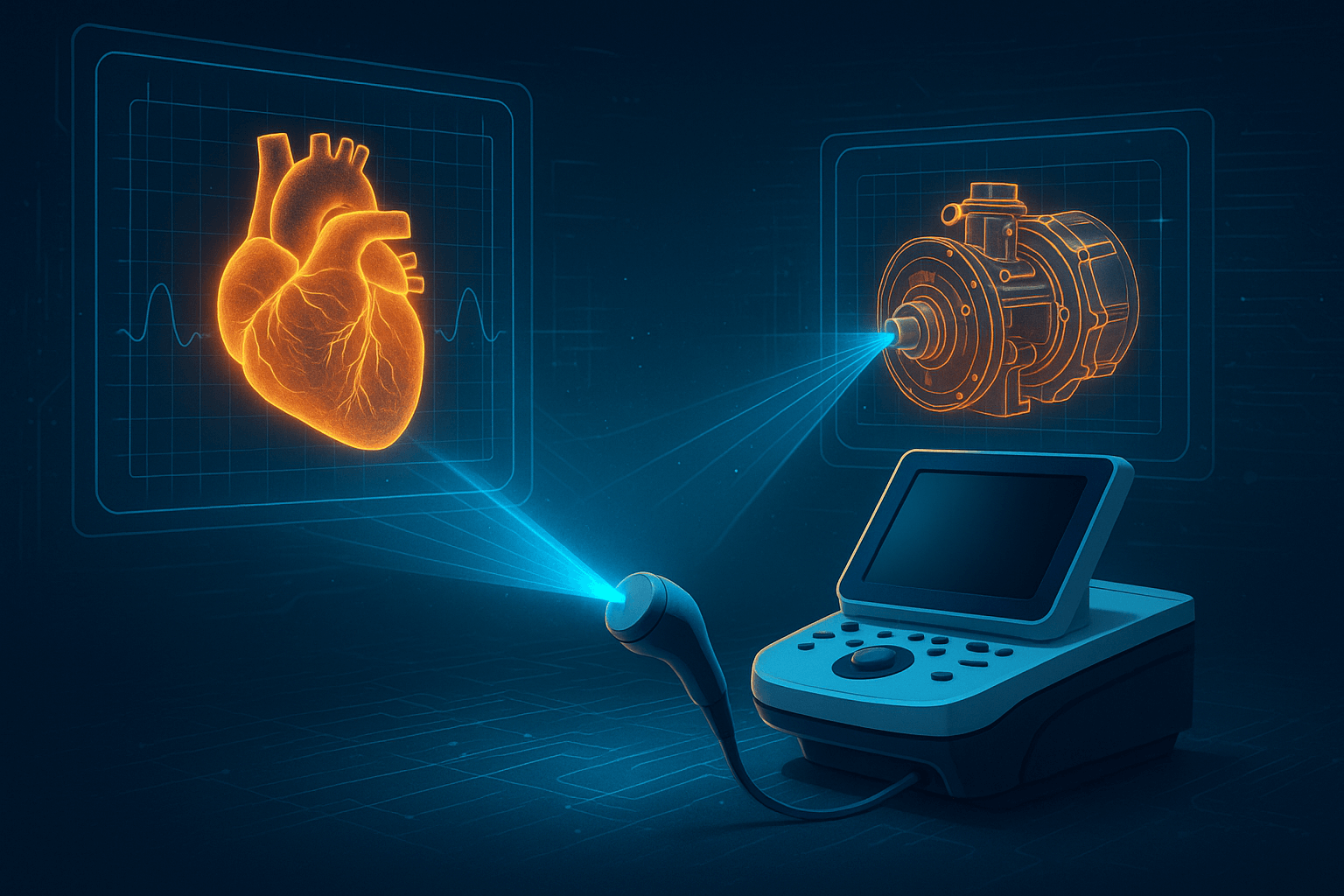
In recent years, ultra-precise ultrasound technologies have moved far beyond traditional medical scans. With accuracy down to microns and the ability to capture real-time 3D and even 4D images, these innovations are opening new frontiers in healthcare, industry, and scientific exploration. This isn’t just about seeing deeper — it’s about interacting with matter in ways once thought impossible.
What Are Ultra-Precise Ultrasound Technologies?
Ultra-precise ultrasound technologies use high-frequency sound waves combined with advanced sensors, AI-driven processing, and precision calibration. Unlike conventional ultrasound, these systems can:
- Map microstructures in living tissue at near-cellular resolution
- Track microscopic movements in real-time
- Target specific points for therapeutic purposes without damaging surrounding areas
This is achieved by increasing the frequency range, optimizing waveform control, and leveraging AI algorithms to process massive amounts of data instantly.
Applications Across Multiple Fields
1. Medical Imaging & Diagnostics
- Detecting early-stage cancers by visualizing tissue changes before they are visible through standard imaging
- Tracking blood flow in microvessels to diagnose cardiovascular risks
- Monitoring fetal development with unprecedented clarity and safety
2. Precision Surgery & Therapy
- Focused ultrasound can destroy tumors without incisions
- Non-invasive treatment of neurological conditions such as Parkinson’s tremors
- Regenerative medicine applications, stimulating targeted tissue repair
3. Industrial & Engineering Uses
- Detecting microfractures in aerospace and automotive components
- Quality control in semiconductor and microchip manufacturing
- Mapping structural integrity in 3D-printed materials
4. Scientific Research & Innovation
- Studying fluid dynamics in microgravity
- Mapping tiny marine organisms in ocean research
- Analysing nanomaterial structures in physics experiments
Why Ultra-Precision Matters
The jump from millimeter to micron-scale imaging is more than a technical upgrade — it changes what’s possible. Higher resolution means earlier detection, more accurate treatment, and deeper understanding of complex systems. When paired with AI, these systems don’t just capture images — they interpret them, flag anomalies, and even suggest solutions.
Challenges & The Road Ahead
While promising, ultra-precise ultrasound technologies face challenges:
- High equipment cost and training requirements
- Data storage demands for high-resolution imaging
- Need for rigorous safety standards at high frequencies
Future developments may include portable ultra-precise ultrasound devices, integration with augmented reality (AR) for live-guided surgery, and real-time 3D holographic imaging for both medicine and manufacturing.
Closing Thoughts
Ultra-precise ultrasound technologies are shaping a world where diagnosis is faster, surgery is safer, and research is more accurate than ever. As the tech becomes more accessible, expect it to impact not just hospitals, but homes, factories, and even space missions.