
What Is Money, Really?
Let’s be honest, most of us use money every single day without ever stopping to ask what it really is.
We work for it, trade with it, stress about it, and sometimes let it define how successful or safe we feel. But if you strip away the numbers on the screen or the paper in your wallet, what’s actually left?
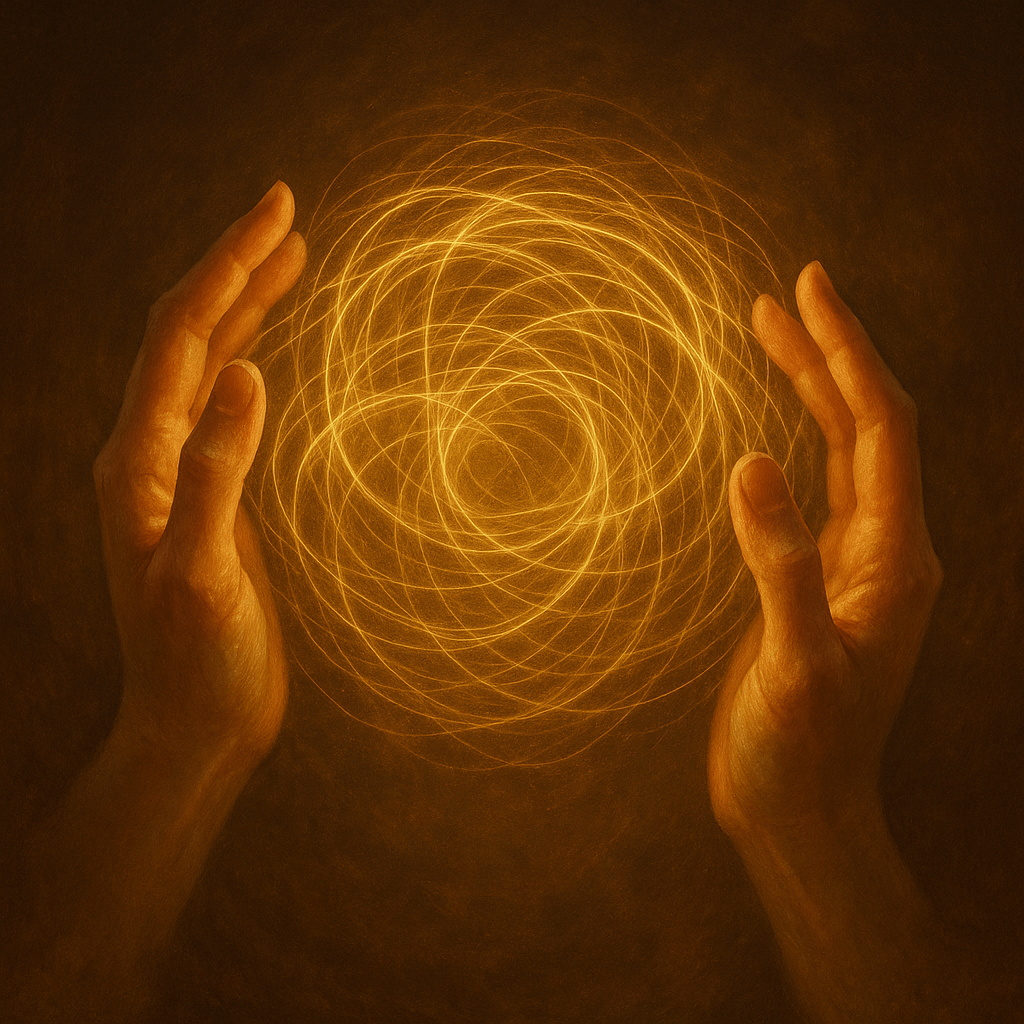
Money, at its core, isn’t gold, paper, or pixels — it’s trust.
It’s the world’s most agreed-upon story.
When you accept a note or a digital transfer, you’re not receiving real value; you’re accepting a promise. That promise says, “Someone, somewhere, will give you something in return.” And the whole global economy runs on that shared belief.
It’s kind of wild when you think about it. Every coffee, car, or house is exchanged not for real value, but for a symbol of value, something that only works because everyone else agrees it does.
That’s both genius and dangerous. Because if money is just belief, whoever controls the story controls the people.
The Origin of Exchange – From Barter to Belief
Long before money existed, people traded what they had for what they needed.
A farmer might swap grain for a fisherman’s catch, or a potter might trade bowls for fresh fruit. Simple, right? Everyone gave something real, and everyone got something real.
But as societies grew, barter started to get messy.
What if you had goats but needed shoes, and the shoemaker didn’t want goats? That’s when humans got creative. They started using stand-ins for value, things like shells, salt, beads, or pieces of metal that everyone agreed had worth.
Those little tokens weren’t valuable on their own. You couldn’t eat a coin or wear a shell.
But they made trade easier. More than that, they built trust between strangers.
And that’s when something powerful happened: we stopped trading things and started trading beliefs.
Money became the world’s first shared language, a symbol that said, “I trust this system, and I trust you’ll do the same.”
Over time, that shared belief allowed cities, nations, and entire civilizations to form. It connected people across oceans and generations.
But somewhere along the way, we forgot that money only works because we believe in it. And belief, as history shows, can be shaped, or even controlled.
The Invention of Debt – The Invisible Contract
Once people trusted tokens, something subtle, but massive, began to shift.
Money was no longer just a tool for exchange; it became a tool for control.
At first, debt was simple. You owed your neighbor a bag of grain or a few coins, no big deal. But then, as rulers, temples, and early banks appeared, debt became something bigger. It turned into an invisible contract that could shape whole societies.
If you borrowed money, you didn’t just owe coins; you owed time, labor, and often your freedom.
Debt became a quiet way to bind people. Empires were built not just through armies, but through ledgers.
It’s strange to think that the numbers in those early books, scratched in clay or inked on parchment, had the power to move armies, starve villages, and build monuments. But they did.
Because once a value was written down, it became permanent. It was no longer between people, it was between people and the system.
That’s the real birth of financial power.
Debt turned trust into obligation. And over time, that obligation became the foundation of authority, the right to say who owns what, who owes what, and who deserves what.
So when we talk about “freedom,” it’s important to remember: the chains that hold most people today aren’t made of metal — they’re made of debt.
From Gold to Government – The Shift of Power
For thousands of years, gold and silver ruled the world.
They were rare, shiny, and hard to fake, the perfect foundation for trust. If you held a gold coin, you held real value in your hand. That’s why kingdoms stored it, wars were fought over it, and explorers sailed across oceans in search of it.
But as trade expanded, carrying gold around became a problem. It was heavy, risky, and hard to move in large amounts.
So banks stepped in. They offered to hold your gold safely and gave you a piece of paper, a “note” — promising that your gold could be reclaimed anytime.
Those notes eventually became money itself. People stopped asking for the gold back and just used the paper.
It was more convenient… but it came with a cost.
Whoever issued the paper, controlled the gold.
And soon, governments realized they didn’t need gold at all. They could print the promise without the treasure.
That’s how the gold standard faded and fiat money was born, money created from nothing, backed not by metal, but by faith in authority.
The power to print money became the power to control economies, influence wars, and shape destinies.
It’s no exaggeration to say: that moment changed humanity.
Money was no longer a reflection of value… It became the value.
And from that point on, the few who could create money had the power to define reality for everyone else.
The Illusion of Freedom – Modern Money and the Hidden Cage
Today, money feels limitless.
You can tap your phone, move numbers across the world in seconds, or even make millions trading pixels on a screen. It looks like freedom — a global playground of opportunity.
But behind that freedom sits a quiet truth: modern money isn’t yours.
Every dollar, pound, or euro is born as debt.
When governments “create” money, they actually borrow it, promising to pay it back with interest.
That means for every coin in circulation, someone owes something. And as new money is created, new debt is too. It’s a system designed never to be paid off.
Banks play their part as middlemen in this invisible game.
They don’t lend money they have… They create money when you borrow.
With every signature, a digital number appears in your account, but it’s matched by equal debt somewhere else.
So even when you work, save, or invest, you’re still operating inside a structure of ownership that isn’t yours.
You can move freely within it — but you can’t escape it.
That’s the illusion.
We feel in control because we can spend, but real control lies with those who can create.
And it’s not about conspiracy — it’s about design.
The system was built to ensure perpetual motion, perpetual growth, and perpetual dependence.
Money, in its current form, doesn’t serve humanity; humanity serves money.
Bitcoin: The First Crack in the Wall
In 2008, right after the world’s financial system nearly collapsed, an anonymous person, or maybe a group, calling themselves Satoshi Nakamoto published a nine-page paper.
It was titled “Bitcoin: A Peer-to-Peer Electronic Cash System.”
At first glance, it looked like a geeky whitepaper – lines of code, cryptography, and math. But hidden within it was something revolutionary:
a blueprint for trust without authority.
Bitcoin didn’t rely on banks, governments, or middlemen.
It relied on math and consensus.
Every transaction was verified by a global network of computers, each one checking and confirming the others. No single person could cheat, lie, or change the record.
For the first time in history, people could send value to each other directly – no permission required, no central gatekeeper standing in the way.
Bitcoin wasn’t just digital money.
It was a declaration of independence – a quiet rebellion written in code.
And its timing couldn’t have been more poetic.
As governments bailed out the very institutions that caused the crisis, Bitcoin offered an alternative built on transparency and fairness.
It was humanity’s first digital currency of the people, designed not to control, but to empower.
That’s why Bitcoin isn’t just a financial innovation – it’s a philosophical one.
It asks a simple but dangerous question:
What if trust didn’t need power?
The Architecture of Trust – How Blockchain Works
If Bitcoin is the symbol, blockchain is the soul.
Think of it like a giant, public notebook that everyone can read but no one can secretly edit. Every time a transaction happens – every trade, payment, or record – it gets written into a block. That block is locked, sealed with cryptographic proof, and added to the chain of all previous blocks.
Once it’s in there, it’s permanent. No erasers. No cover-ups.
What makes it magical is that this notebook isn’t stored in one place. It’s copied across thousands of computers all over the world, constantly syncing, verifying, and keeping each other honest.
That’s why blockchain is called decentralized.
There’s no central authority to hack, bribe, or shut down – because the power is distributed among everyone.
Every participant, every node, becomes part of a collective nervous system of truth.
If someone tries to lie, the rest of the network instantly sees the mismatch and rejects it.
In a world built on manipulation and hidden agendas, blockchain is radical because it says:
“Truth should be public. Trust should be earned, not enforced.”
That’s the foundation of what makes cryptocurrencies, decentralized apps, and eventually – digital nations like Terra Pacis – possible.
Blockchain doesn’t just record transactions. It records agreements.
And that, my friend, is how technology quietly started rewriting the social contract.
Beyond Money – The Rise of Decentralized Power
At first, people saw blockchain as just a new kind of money.
Fast, borderless, anonymous – sure, that was cool. But over time, something much deeper began to emerge.
If code could replace banks… what else could it replace?
That single question opened a door that can’t be closed.
Soon, people realized the same technology that kept Bitcoin honest could also manage voting, contracts, identity, even governance.
It was no longer about currency – it was about consensus.
We started to see decentralized organizations pop up – DAOs, or Decentralized Autonomous Organizations.
These are communities that make decisions not through CEOs or politicians, but through smart contracts and collective voting.
In these systems, everyone’s voice can carry equal weight, and rules are transparent, written in code for all to see.
It’s a new way of organizing human cooperation – one that flips the old pyramid of power upside down.
But here’s the beautiful irony: the more we decentralize technology, the more we rediscover something ancient – tribal unity, mutual respect, and shared ownership.
Blockchain didn’t just give birth to new systems. It reminded us of old truths.
Power doesn’t have to mean control.
It can mean connection.
And that’s the essence of what Terra Pacis stands for – using modern tools to return to timeless human values: honesty, fairness, and freedom.
Bridging Worlds – Connecting Crypto and the Real Economy
For years, people treated crypto like an island – a digital world separate from “real” money. You’d buy Bitcoin, watch the price rise and fall, maybe cash out into dollars or pounds, and that was that.
But that gap, between crypto and the everyday economy, is exactly what keeps humanity divided between two systems: one controlled, one free.
To truly evolve, those two worlds need a bridge.
That bridge isn’t just about technology, it’s about trust.
It means creating banks, exchanges, and payment systems that understand both sides – where a citizen can earn, save, and trade within a decentralized economy, yet still pay their rent, buy groceries, or travel freely across borders.
In other words: freedom has to function.
That’s where projects like the Bank of Terra Pacis come in – systems built to harmonize both realities.
Imagine earning your income in EarthCoin or Bitcoin within TP, then instantly converting it into local currency when you need to interact with the outside world.
No gatekeepers, no manipulation – just pure interoperability.
This is the key to mass adoption.
When digital currency becomes not just a symbol of freedom, but a working part of daily life, the world changes.
The ultimate goal isn’t to escape the system – it’s to outgrow it.
To build a new economy that’s transparent, fair, and open… yet still capable of supporting real people, real families, and real dreams.
That’s how decentralization moves from theory to practice – from code to community.
The New Social Contract – Money, Freedom, and Responsibility
Freedom sounds simple – until you try to live it.
For centuries, people fought kings, empires, and governments for the right to rule themselves. But what most never realized is that freedom doesn’t mean chaos – it means self-mastery.
When money was centralized, responsibility was outsourced.
Someone else decided how it was printed, where it flowed, and who got to use it.
In return, we were given convenience – and slowly taught not to question the system that fed us.
But decentralization flips that script.
When you hold your own wallet, your own keys, your own destiny – there’s no one left to blame, and no one left to save you.
That’s the true price of freedom: responsibility.
In this new age, money becomes more than a tool – it becomes a mirror.
It reflects your ethics, your choices, and your trust in community.
Every transaction becomes a tiny vote for the kind of world you believe in.
So the question isn’t just, “What is Bitcoin worth?”
It’s, “What kind of world does Bitcoin make possible?”
And that’s where Terra Pacis steps in.
It’s not just a digital country – it’s a living experiment in conscious economics.
A place where money, freedom, and responsibility exist in balance, guided not by force, but by shared purpose.
Because real freedom isn’t about breaking systems.
It’s about building new ones – together.
The Future of Value – A World Beyond Control
We’ve lived in a world where money defined us.
It decided who had power, who had a voice, and who got left behind.
But now, for the first time in history, humanity holds the chance to redefine money itself – and with it, the meaning of value.
When Bitcoin was born, it wasn’t just the start of a new economy – it was the spark of a new consciousness.
A reminder that value doesn’t come from institutions or policies, but from people. From creativity. From trust freely given, not forced.
As more of the world wakes up to that truth, the system begins to shift.
Governments will adapt. Banks will evolve. And those who refuse to change will simply fade into the background.
Because once an idea like freedom takes root… There’s no going back.
The future of value isn’t about control — it’s about connection.
It’s about creating systems that grow with humanity, not over it.
Where money flows like energy — open, clean, and regenerative.
And perhaps that’s the greatest revolution of all:
Not a fight against the old world, but the quiet building of a new one.
Terra Pacis stands as one of those blueprints – a living network built on cooperation, integrity, and respect for human potential.
A nation without borders, built not on land, but on truth.
Because when you remove control from money…
you return power to people.
The future isn’t about owning Bitcoin – it’s about understanding what it stands for: a world where freedom is no longer granted, but chosen.